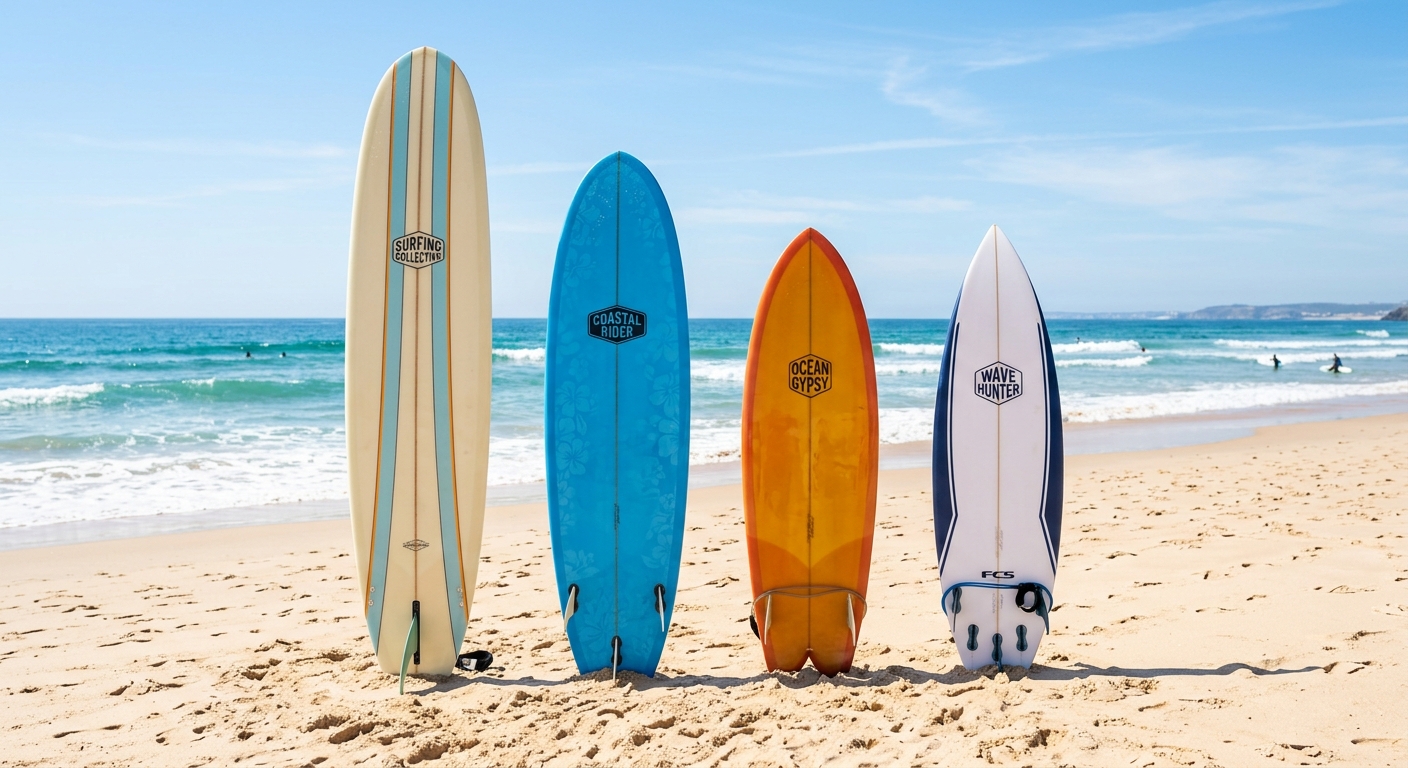
The quickest way to hate surfing is to learn on the wrong board. If you're struggling to catch waves or constantly falling on takeoff, it's probably not your technique—it's your equipment.
Here is our definitive advice for choosing a board that will actually help you progress.
Volume is Everything
Volume (measured in liters) dictates how well a board floats. More float means easier paddling. Easier paddling means catching more waves. For your first board, you want high volume. Period.
The Foamie: Your Best Friend
For absolute beginners, a foam soft-top longboard (8 to 9 feet) is unbeatable. They are stable, extremely buoyant, and most importantly, forgiving when they inevitably hit you in the head. Don't let ego push you onto a smaller board too soon.
Transitioning to Hard Boards
Once you are consistently catching unbroken waves and riding down the line on a foamie, it's time to look at a funboard or a mid-length (7'0" to 8'0"). They offer the paddle power of a longboard but allow for more maneuverability.
Don't Forget the Hardware
A board is just a piece of foam without the right accessories. You absolutely need:
- A reliable heavy-duty leash (it should be roughly the same length as your board).
- Good grip. Stock up on surf wax appropriate for your local water temperature.
Get Your Board Ready
Shop our selection of essential surf hardware, from fins to leashes and wax.
Shop Surf Hardware